

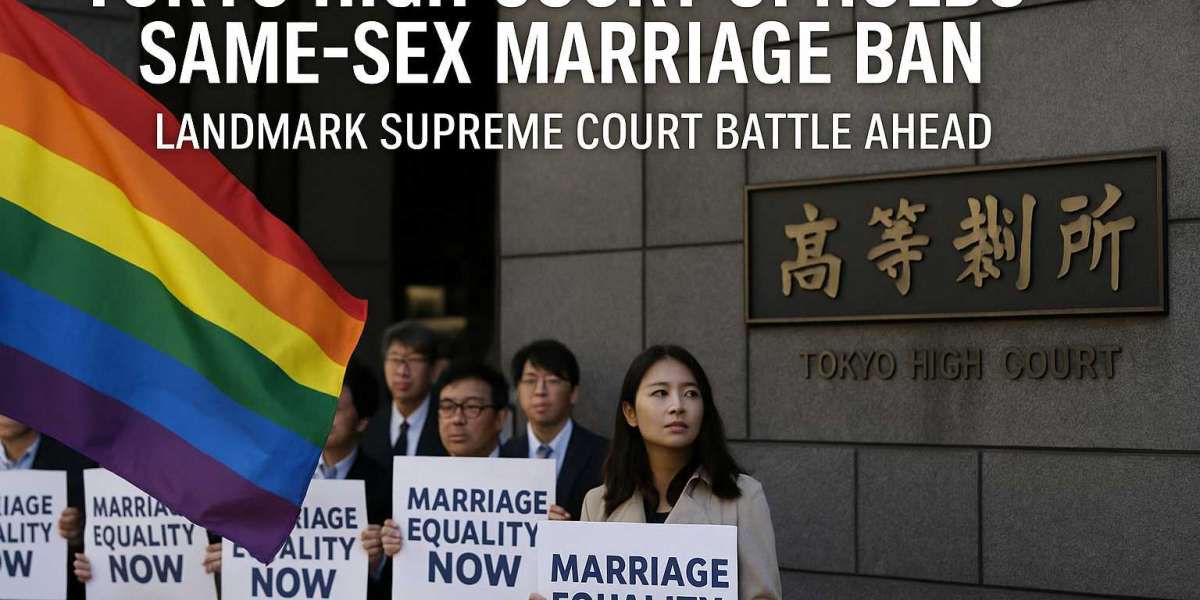

In a ruling that splits Japan’s judiciary, judges reaffirm the constitutionality of the marriage law — setting the stage for a historic showdown over LGBTQ+ rights.
In a major legal and social turning point, Japan’s Tokyo High Court ruled on Friday, November 28 2025, that the nation’s current ban on same-sex marriage is
The case, brought by eight plaintiffs seeking recognition and compensation, was the
The ruling sharply diverges from five earlier appellate decisions that found the ban either unconstitutional or inconsistent with the spirit of equality and individual liberty enshrined in Japan’s post-war constitution. Those courts held that denying marriage equality violated citizens’ right to pursue happiness and equality under the law.
Human-rights groups immediately condemned the Tokyo decision.
Amnesty International’s East Asia researcher Boram Jang called it “a damaging step backwards” and urged lawmakers to act where the courts remain divided.
“The government must ensure equal protection for all couples under Japanese law,” Jang said, warning that delay would deepen discrimination and international isolation.
Public opinion continues to outpace politics. Surveys consistently show that a majority of Japanese citizens support marriage equality, particularly among younger voters and residents of major urban areas such as Tokyo and Osaka. Yet the ruling Liberal Democratic Party (LDP) has maintained its opposition, citing constitutional wording that defines marriage as based on “the mutual consent of both sexes.” Conservative factions within the party argue that any change would require constitutional amendment rather than legislative reinterpretation.
Legal scholars describe today’s outcome as both a setback and an opening. By creating a
For LGBTQ+ advocates, the ruling underscores both how far Japan has come — and how far it still has to go. As one plaintiff told reporters outside the courthouse, “We lost today, but the real fight starts now.”